BioCOOL
Developing data-driven, bio-fabricated, and carbon-negative building skins designed for zero-energy passive cooling in warming climates.
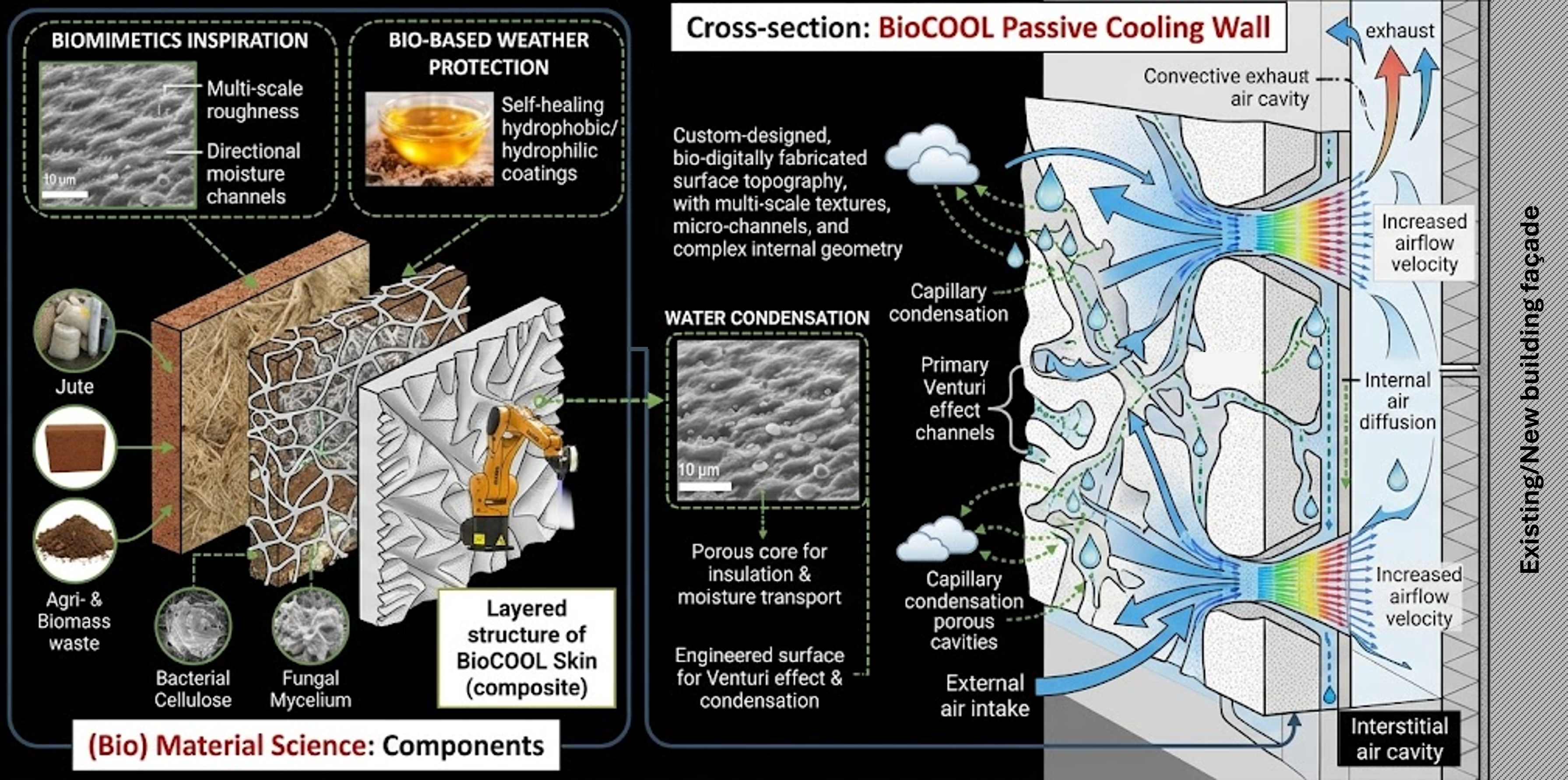
BioCOOL utilises the inherent hygroscopic properties of mycelium-based composites to facilitate passive cooling. By converting agricultural waste into variably porous geometries, we create a "living skin" that regulates indoor temperatures without mechanical energy.
Project Overview
The BioCOOL project addresses the urgent need for sustainable cooling solutions in Australia. By merging Bio-fabrication with Building Physics, this research develops weather-resistant mycelium composites (MC) that act as a vernacular "Bio-jaali"—reimagining traditional passive design through modern biotechnology.
Carbon-Negative
Repurposing agricultural by-products into structural materials that sequester carbon throughout their lifecycle.
Passive Cooling
Designing biomimetic porous structures that enable evaporative cooling and natural ventilation.
Climate Resilience
Evaluated against future climate scenarios to ensure performance during extreme heatwaves and blackouts.
The Vision
BioCOOL aims to revolutionise the building fabric industry by providing a low-embodied carbon alternative to energy-intensive cooling systems. Our goal is to create resilient, equitable, and bio-intelligent habitats that harmonize with nature while protecting occupants from the challenges of a warming planet.